What Happens to American Suppliers If Europe Starts Closing Doors?
- Ian Makgill
- Export , Business
- 20 Jan, 2026
- 02 Mins read
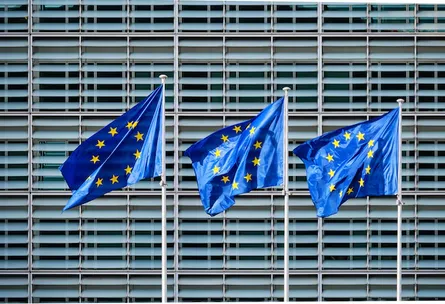
The EU's Anti-Coercion Instrument gives Brussels a powerful new tool: the ability to exclude companies from unfriendly nations from public procurement across all member states. While designed with economic bullies in mind, the mechanism works against any country — including, theoretically, the United States.
As transatlantic tensions simmer over trade, technology policy, and defence spending, it's worth asking an uncomfortable question: what would happen if American firms found themselves on the wrong side of European procurement rules?
The Exposure Is Enormous
American technology companies aren't just suppliers to European governments — they're the infrastructure. Microsoft, Amazon Web Services, Google, Oracle, and Salesforce underpin everything from tax collection to healthcare records. The big consultancies shape policy. American defence contractors are embedded in NATO capabilities.
This isn't like restricting Huawei from 5G networks, where alternatives existed and the installed base was limited. Restricting American firms would mean untangling dependencies that have built up over decades.
Buyers Face an Implementation Nightmare
Even if the political will existed, contracting authorities would face brutal practical challenges.
Proving who's who becomes impossibly complex. Modern corporate structures obscure ultimate ownership. A bidder registered in Amsterdam might be controlled through a chain of holding companies that eventually leads back to Delaware. Procurement officers aren't forensic accountants — they'd be relying on self-certification from companies with strong incentives to obscure their origins.
Incumbent suppliers can't simply be switched off. A five-year cloud hosting contract or an embedded defence maintenance agreement doesn't disappear because policy changes. Authorities would face the choice of expensive early termination, awkward contract extensions with now-restricted suppliers, or operational disruption that affects public services.
The replacement market may not exist. For some categories — hyperscale cloud, enterprise software, advanced defence systems — European alternatives either don't exist at comparable capability or can't scale to meet demand. Restricting American suppliers without viable alternatives isn't sovereignty, it's self-harm.
Who Benefits?
If American firms faced meaningful restrictions, the winners would be predictable.
European tech sovereignty champions have been preparing for this moment. SAP, OVHcloud, Atos, and T-Systems have all positioned themselves as the secure European alternative to American hyperscalers. France in particular has invested heavily in building up national champions.
European defence consolidation would accelerate. BAE Systems, Airbus Defence, Leonardo, Thales, and Rheinmetall would absorb work currently flowing to Lockheed Martin and Raytheon. The constraint is capability — European defence industry cannot currently match American output, so any transition would involve painful gaps.
Indian IT services firms (TCS, Infosys, Wipro) are already significant players in European government contracts and carry no political baggage in a US-Europe dispute. They'd expand rapidly.
Consultancies and lawyers would thrive regardless of outcome. The complexity of proving supply chain compliance and restructuring vendor relationships creates an industry in itself.
The Uncomfortable Reality
None of this is likely to happen quickly or completely. The mutual dependencies between the US and Europe mean that aggressive use of procurement restrictions would hurt both sides. But the tools now exist, the political temperature is rising, and American suppliers should be thinking carefully about how exposed they are to policy decisions made in Brussels rather than Washington.
The companies best positioned are those already investing in European subsidiaries, local data residency, and supply chains that can demonstrate independence from the US parent. The worst positioned are those assuming the transatlantic relationship will remain stable enough that none of this matters.
It might. But it's no longer guaranteed.